How does Tea work
What Does Tea Know That Modern Medicine Is Just Discovering?
What Makes Tea Work? The Ancient Medicine Modern Science Is Finally Beginning to Understand
By Red’s Zen Tea | The Science, Soul & Wisdom of Tea
What if one of nature’s most fascinating wellness secrets has been sitting in your teacup all along?
Long before laboratories, pharmaceutical companies, and the billion-dollar wellness industry, there was tea.
For thousands of years, people turned to a humble leaf for clarity, vitality, comfort, and healing. Emperors treasured it. Monks incorporated it into meditation. Traditional healers prescribed it. And entire civilizations built rituals around it.
But here's where the story gets interesting.
What our ancestors understood through centuries of observation, modern science is now beginning to explore through research.
And that brings us to a fascinating question:
What actually makes tea work?
Is it the antioxidants? The amino acids? The remarkable chemistry of the tea plant? Or is there something equally powerful about the simple act of slowing down and drinking it?
As a Tea Master, I believe the beauty of tea lies in the relationship between all of these elements.
So, let's explore the science, the history, and the extraordinary potential hiding inside a single leaf.
1. Before Tea Became a Beverage, It Was Valued as Medicine
Our story begins in ancient China, where tea's history is intertwined with both medicine and mythology.
According to legend, around 2737 BCE, the Chinese emperor and legendary herbalist Shen Nong discovered tea when leaves from a nearby tree drifted into his boiling water.
Another version of the legend describes Shen Nong experimenting with medicinal plants and using tea to counteract their harmful effects.
It's a beautiful story, although historians distinguish these legends from verifiable historical evidence.
What we do know is that tea has an extraordinary history.
Archaeological research published in Scientific Reports identified ancient tea remains dating to the Han dynasty, while historical scholarship documents tea's gradual evolution from a plant prized for its perceived medicinal qualities into a beverage enjoyed for pleasure, hospitality, and contemplation.
Scientific Reports+1
In traditional Chinese medicine, tea was associated with supporting digestion, encouraging alertness, clearing heat, and restoring balance.
These traditional uses reflect historical beliefs rather than proof that tea treats particular illnesses. Nevertheless, they reveal something remarkable: people recognized tea as more than a flavorful drink long before anyone knew what a polyphenol was.
By the Tang dynasty, tea had also become deeply connected with philosophy, spirituality, and daily life.
It wasn't simply something people consumed.
It was something they practiced.
And perhaps that is the first lesson tea has to teach us: wellness isn't always about what we add to our lives. Sometimes it's about how we approach the things we already do.
2. The Chemistry of a Miracle? Meet Camellia Sinensis
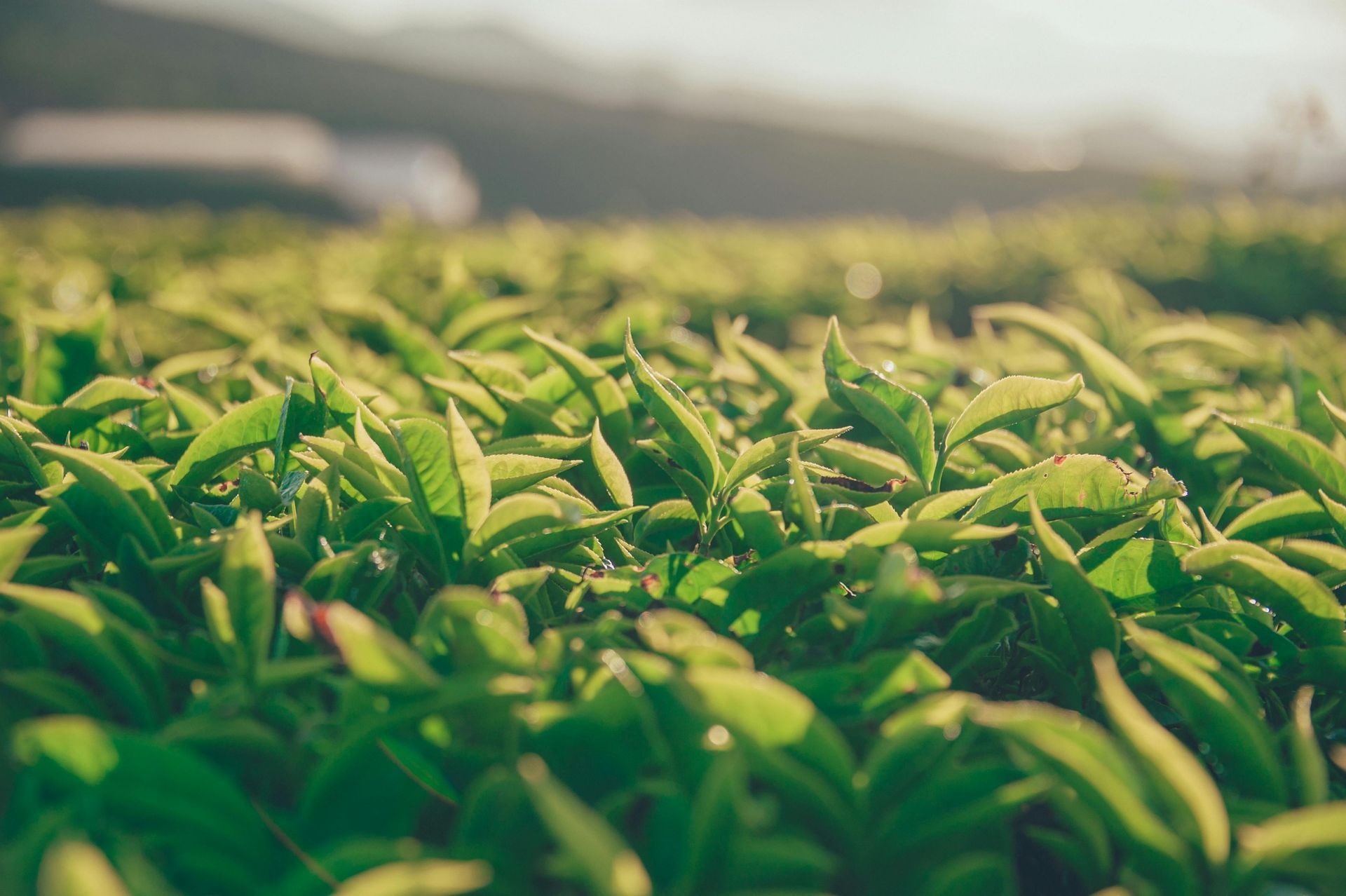
New tea leaves and sptouts in tea plantation
Here's something that surprises many people.
Green tea, black tea, white tea, oolong, yellow tea, and pu-erh all originate from the same remarkable plant:
Camellia sinensis.
Yes. One plant. An extraordinary spectrum of flavors, aromas, chemical compounds, and traditions.
What makes these teas different is largely how the leaves are harvested, handled, oxidized, heated, and, in some cases, microbially transformed.
And those processes influence the chemistry inside your cup.
Tea contains hundreds of naturally occurring compounds. Among the most interesting are polyphenols, caffeine, amino acids, and aromatic substances.
These compounds interact with human biology in different ways, making tea a particularly fascinating subject for scientific study.
The antioxidants: Nature's little defenders
Tea is especially rich in polyphenols, a family of plant compounds that includes flavonoids.
In green tea, some of the best-studied flavonoids are called catechins, including EGCG (epigallocatechin gallate).
These compounds have demonstrated antioxidant and anti-inflammatory activity in laboratory research.
Why does that matter?
Every day, our bodies experience oxidative stress, a process involving reactive molecules that can damage cells when the body's protective systems become overwhelmed.
Oxidative stress is associated with aging and numerous chronic diseases.
But here's an important distinction: although tea polyphenols act as antioxidants in laboratory experiments, that doesn't mean drinking tea directly neutralizes every harmful molecule in the body.
Human physiology is far more complicated.
Researchers are investigating how tea's compounds may influence cellular signaling, inflammation, vascular function, and the body's own protective systems.
NCCIH+1
In other words, tea isn't a magic shield against disease.
It's a fascinating plant with biologically active compounds that may contribute to long-term wellness.
And unlike the latest expensive wellness trend, it has thousands of years of cultural history behind it.
3. The Science of Calm Energy: Why Tea Feels Different
Have you ever noticed that a cup of tea can leave you feeling both alert and relaxed?
There's a fascinating scientific reason researchers are exploring this experience.
Tea naturally contains two noteworthy compounds:
Caffeine and L-theanine.
Caffeine supports alertness and attention by acting on the central nervous system.
L-theanine is an amino acid found naturally in tea that researchers have studied for its potential effects on attention, stress, and mood.
Together, these compounds offer an intriguing combination.
A systematic review and meta-analysis published in Nutrition Reviews in 2025 examined 50 randomized controlled trials involving tea, L-theanine, and combinations of L-theanine and caffeine.
The researchers found evidence that the combination could produce small to moderate improvements in certain measures of attention and cognitive performance. They also noted uncertainty in some findings and called for more research involving actual tea beverages.
PMC
Think about that for a moment.
A plant consumed for centuries during meditation and contemplation contains compounds that modern scientists are studying for their effects on mental performance.
Ancient ritual meets modern neuroscience.
Now, this doesn't mean every cup of tea will instantly create a state of perfect Zen. The amounts of caffeine and L-theanine vary between teas, and individual responses differ.
But it does give us another reason to appreciate what makes this plant so extraordinary.
Sometimes, the most fascinating chemistry happens in the simplest of places.
Like your favorite teacup.
4. Can Drinking Tea Actually Help You Live Longer?
本職は和紅茶?!知れば知るほど面白い、べにふうきの世界|全国の国産・和紅茶お取り寄せ通販 和紅茶専門店|SuQ Cha(サクチャ)
Now, this is where the research becomes particularly compelling.
In 2024, a systematic review and meta-analysis published in Epidemiology and Health examined 38 prospective cohort datasets involving nearly 2 million people.
Researchers explored the relationship between tea consumption and mortality, including deaths from cardiovascular disease.
Their findings?
Compared with people in the lowest tea-consumption categories, those in the highest categories had:
- 10% lower all-cause mortality risk
- 14% lower cardiovascular mortality risk
The researchers also found that drinking approximately 1.5–2 cups of tea daily was associated with favorable outcomes.
But remember, these were observational studies. They cannot prove that tea itself caused people to live longer. The association with cancer mortality was also not statistically conclusive.
PubMed
Still, that's an extraordinary finding for something as accessible and enjoyable as tea.
And cardiovascular health is only one area of interest.
A 2025 meta-analysis of 36 randomized controlled trials found that green tea supplementation was associated with small reductions in both systolic and diastolic blood pressure, averaging approximately 1 mmHg.
Not a miracle cure. Not a replacement for medical treatment. But a measurable effect worth investigating.
PubMed
Perhaps the question isn't whether tea can replace modern medicine.
Perhaps it's how a simple daily habit might complement an overall healthy lifestyle.
5. Your Gut and Your Tea: A Fascinating Relationship
Did you know that your gut contains trillions of microorganisms that help influence digestion, metabolism, and immune function?
Scientists are now exploring how tea's naturally occurring polyphenols interact with this complex ecosystem.
Some polyphenols pass through the small intestine without being fully absorbed. When they reach the colon, gut bacteria can transform them into other compounds.
This creates a fascinating two-way relationship: our microbes change the compounds in tea, and tea may influence the microbial environment.
A 2024 scientific review in Molecules examined research on different types of processed tea and their interactions with gut microbiota.
The results suggest interesting possibilities, although many of the findings still come from laboratory and animal studies. More human clinical research is needed.
PubMed
What I find especially beautiful is that the relationship between tea and our bodies is much more intricate than simply drinking antioxidants.
Our bodies are ecosystems.
And the plants we consume interact with those ecosystems in ways we're still discovering.
6. Why I Believe We Should Drink the Rainbow of Tea
Yamamasa Koyamaen Matcha Collection – Japanese Select
Organic Yunnan Pu-Erh Tea - Teaoli
One of my favorite philosophies at Red's Zen Tea is something I often tell my students:
Drink the rainbow of tea.
Why limit yourself to one type of tea when nature offers such a fascinating variety?
Each tea goes through a different journey from leaf to cup, creating distinct flavors, aromas, and chemical compositions.
Green teas are rich in catechins. Black teas contain oxidation-derived polyphenols such as theaflavins and thearubigins. Oolong teas offer a varied spectrum of compounds depending on their processing. White teas retain their own distinctive phytochemical profiles, while pu-erh undergoes transformations associated with microbial processing and aging.
Does that mean one tea is automatically healthier than the others?
Not necessarily.
The research doesn't support declaring a universal winner.
And that's precisely why I believe variety is so valuable.
Just as we enjoy a colorful assortment of fruits and vegetables, we can explore the different characteristics of tea rather than chasing a single supposedly superior superfood.
Your morning might begin with the refreshing vegetal notes of green tea. Your afternoon could bring the rich complexity of an oolong. And perhaps the evening calls for a naturally low-caffeine white tea, depending on the variety and preparation.
Every cup offers a different experience.
And every experience is an opportunity to reconnect with the extraordinary plant that makes it possible.
7. The Missing Ingredient: The Healing Power of Ritual
Here's where I believe tea becomes something truly special.
We can study its chemistry, measure its compounds, and analyze its potential physiological effects.
But what happens when we combine the beverage with intentional living?
Consider the difference between grabbing a drink while rushing through your day and deliberately preparing a beautiful cup of tea.
You warm the water.
You select the leaves.
You inhale their aroma.
You watch them unfurl.
And for just a few moments, you give yourself permission to be completely present.
There is a reason tea ceremonies have remained meaningful across cultures and generations.
They create space for contemplation, hospitality, and connection.
Mindfulness practices themselves have been studied for their potential benefits in managing stress and supporting psychological well-being. That doesn't prove a tea ceremony has identical clinical effects, but it gives us an interesting framework for understanding why intentional rituals may feel restorative.
As a Tea Master, I see this regularly in the ceremonies and experiences I facilitate.
People arrive carrying the weight of their day, their responsibilities, their worries, and their endless to-do lists.
And something shifts when they allow themselves to slow down.
Not because tea magically solves their problems.
But because the ritual creates an opportunity to reconnect with themselves.
Tea offers us something the modern world rarely does: an invitation to slow down without feeling like we're falling behind.
And personally, I think that's pretty extraordinary.
8. Is Tea Really Medicine?
So, after thousands of years of traditional use and decades of scientific investigation, can we officially call tea medicine?
The answer deserves some nuance.
Tea contains biologically active compounds. There is promising evidence for certain effects on alertness, cardiovascular risk factors, and other areas of health.
But tea is not a cure-all, and drinking it does not guarantee protection against illness.
The National Institutes of Health's National Center for Complementary and Integrative Health notes that green tea consumed as a beverage is generally considered safe for adults, although caffeine can affect individuals differently. Concentrated green tea extracts are not equivalent to brewed tea and have been associated with adverse effects, including rare cases of liver injury. Some tea products can also interact with medications.
NCCIH
And that distinction is important.
Because honoring the medicinal history of tea doesn't require exaggerating its benefits.
In fact, I believe tea's genuine qualities are fascinating enough without the marketing hype.
We don't need another miracle cure in an expensive bottle.
We need more thoughtful conversations about the everyday choices that support our health.
And perhaps a beautiful cup of tea is a wonderful place to begin.
9. The Tea Revolution Begins in Your Cup
How to Make Tea From Loose Leaves A Simple Guide – Jeeves & Jericho
The deeper I explore the world of tea, the more convinced I become that this extraordinary plant has something valuable to teach us.
Not only about health, but about how we live.
It reminds us that nature is incredibly complex.
That ancient traditions deserve curiosity and thoughtful investigation.
That small daily rituals can create meaningful moments.
And that caring for ourselves doesn't always require another supplement, another wellness trend, or another complicated routine.
Sometimes, it begins with hot water, beautiful leaves, and the willingness to be present.
So the next time you prepare your favorite tea, I invite you to look at it a little differently.
Inside that cup is thousands of years of history, remarkable plant chemistry, ongoing scientific discovery, and an opportunity to connect with yourself.
And perhaps that's the real magic of tea.
It nourishes our curiosity, invites us into the present moment, and reminds us that wellness can be both a science and an art.
Here's to drinking the rainbow, honoring the leaf, and making every cup count.
Steep consciously. Sip intentionally. Live extraordinarily.
— Red
Certified Tea Master | Founder, Red's Zen Tea
Transforming the world, one conscious cup at a time.
The Science Behind the Sip
For readers who want to explore the research further, these are some of the studies and resources referenced in this article.
- Tea consumption and mortality — 2024 meta-analysis — Nearly 2 million participants.
- Tea, L-theanine, caffeine and cognitive function — systematic review — Randomized clinical trial evidence.
- Green tea and blood pressure — 2025 meta-analysis — 36 randomized controlled trials.
- Tea processing and the gut microbiome — 2024 review — Emerging research on tea and gut health.
- National Institutes of Health: Green Tea — Evidence, traditional uses, and safety.
Educational note: This article explores tea's historical uses and emerging scientific evidence. It is not medical advice, and tea should not replace appropriate medical care.